Metal sintered mesh and sintered mesh filter elements are core filtration components widely used in industrial fluid filtration and gas purification. However, due to the complexity of the types, many purchasing and technical personnel often find it difficult to accurately distinguish between and select the right ones. As a professional manufacturer with years of experience in the filtration industry, Huahang will systematically break down the core logic of these two types of products for you, from underlying processes, structural characteristics, performance advantages, to actual application scenarios, and help you understand their irreplaceable value in complex working conditions.
Sintered Mesh: A New Type of Filter Material Overcoming the Limitations of Traditional Screens
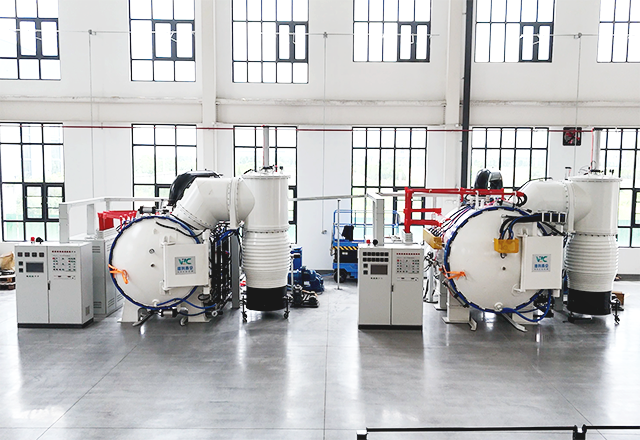
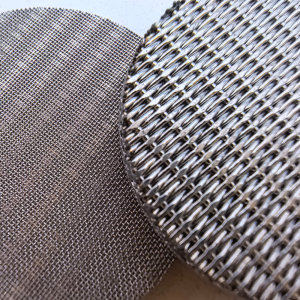
Many people equate sintered mesh with ordinary stainless steel woven mesh, which is actually a huge misunderstanding. Ordinary woven wire mesh is formed by cross-weaving metal wires. During use, it is prone to problems such as mesh deformation, interlayer misalignment, and insufficient strength, and is simply unsuitable for industrial environments with high pressure, high temperature, and strong corrosion. In contrast, the sintered mesh produced by Huahang is an integrated, porous filtration material created by stacking multiple layers of metal woven mesh with varying pore sizes, followed by specialized pressing and high-temperature vacuum sintering at 1,200°C. This process fundamentally resolves the performance shortcomings associated with traditional screens.
Regarding standard construction, Huahang’s sintered mesh typically features a five-layer composite design. From the outside in, these layers consist of a protective layer, a filtration control layer, a dispersion layer, a support frame layer, and a structural skeleton layer. The staggered arrangement of pores across these layers creates uniform, stable filtration channels; this design eliminates the particle leakage issues common in single-layer woven mesh while avoiding the low flow-rate limitations often found in sintered powder materials. For different working conditions, Huahang can also customize three-layer economical structures, six-layer high-pressure resistant structures, as well as special categories such as perforated plate composite sintered mesh and woven sintered mesh to meet the differentiated needs of different scenarios.

In terms of material selection, Huahang sintered mesh covers a variety of mainstream materials such as SUS304, SUS316L, 904L stainless steel, and titanium alloy. SUS304 offers an excellent balance of cost and performance, making it suitable for standard food and beverage applications and general water treatment. SUS316L, featuring molybdenum for superior pitting corrosion resistance, handles corrosive media such as nitric acid and weak acids. Highly corrosion-resistant materials like titanium alloys are specifically designed for extreme operating conditions involving severe corrosion and high temperatures, ensuring long-term operational stability.
Sintered Mesh Filter Cartridges: End-Use Filtration Components Based on Sintered Mesh
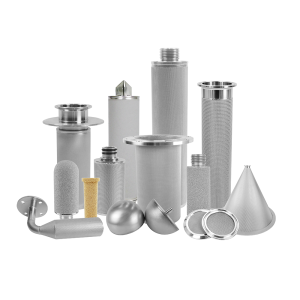
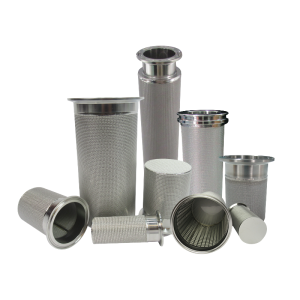
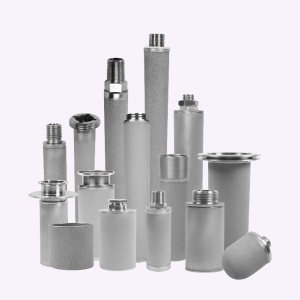
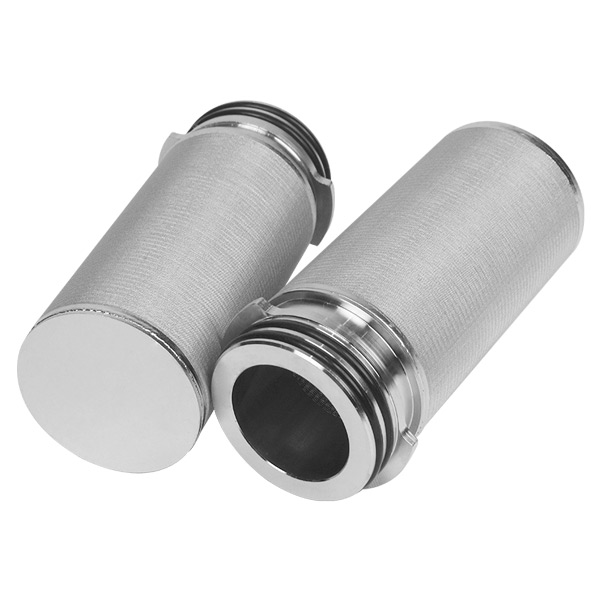
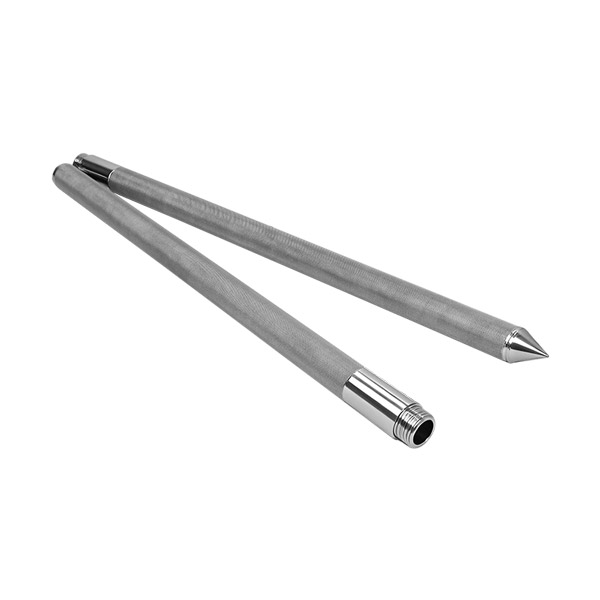
If sintered mesh is a high-performance filtration substrate, then a sintered mesh filter cartridge is a terminal filtration element formed by processing this substrate through rolling, welding, and end cap sealing. It is also a finished component that is directly installed and used in industrial sites. Huahang’s sintered mesh filter elements all use high-grade sintered mesh produced in-house as filter material, controlling the product’s precision and strength from the source and avoiding potential quality instability issues that may occur with externally purchased filter materials.
Unlike standard fiberglass oil filter or polyester air filter cartridges that rely on adhesives to secure the filter layers, Huahang’s sintered mesh cartridges are manufactured without any adhesive additives. Their structures are integrated through high-temperature sintering and argon arc welding, preventing issues such as media shedding or secondary contamination. To accommodate various installation scenarios, Huahang offers multiple connection types—including threaded, tie-rod, quick-connect, and flanged connections. With seamless (weld-free) forming lengths of up to 1,500 mm, these cartridges meet the installation requirements of the vast majority of standard and non-standard filtration equipment.
Regarding performance specifications, Huahang’s sintered mesh filter cartridges offer filtration ratings ranging from 2 to 200 μm, with specific ratings reaching 0.3 μm for gas filtration and 0.45 μm for liquid filtration. They operate stably within a temperature range of -200°C to 650°C and withstand pressures up to 0.6 MPa. Products made from SUS316L are resistant to 40% nitric acid and 80% sulfuric acid, making them fully suitable for the most demanding industrial operating conditions.
Core Advantages: Why Are More Industrial Scenarios Choosing Metal Sintered Products?
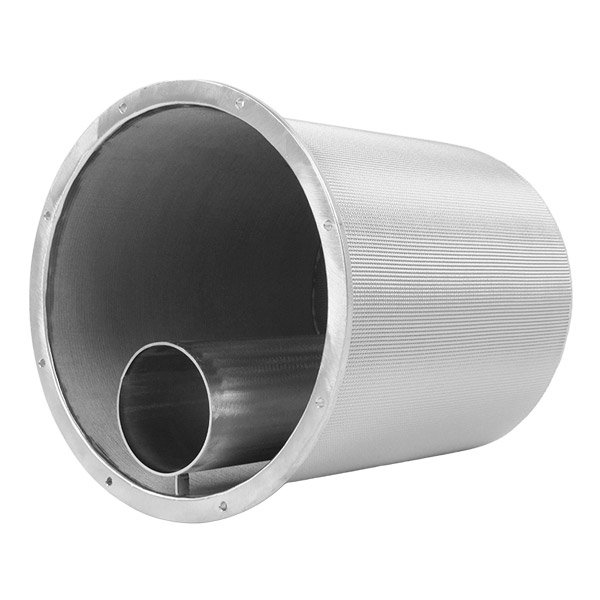
Compared to traditional filtration products such as PP spun-bonded cartridges, melt-blown cartridges, and standard woven mesh, Huahang’s sintered mesh and sintered mesh filter cartridges offer core advantages across three key dimensions.
First, they offer exceptional mechanical strength and stability. Their integrated, sintered metal structure allows them to withstand high-pressure surges without the need for an internal support frame. They resist deformation and damage even under conditions involving high flow rates and large particulate impurities; the mesh structure remains unchanged during long-term use, ensuring consistent filtration precision.
Second, they provide an ultra-long service life and extremely low maintenance costs. Huahang sintered mesh filter elements support physical backflushing and chemical cleaning and regeneration. Backflushing with 0.5MPa compressed air can restore more than 90% of the flow rate. They can also be cleaned by soaking in 5% nitric acid solution. Under normal working conditions, the product life can reach 3-5 years, which is much longer than traditional consumable filter elements, greatly reducing long-term replacement costs.
Third, it is adaptable to complex and extreme working conditions. From filtering cryogenic fluids at temperatures below -200°C to purifying high-temperature flue gas exceeding 600°C, and from filtering standard water to processing highly corrosive chemical media, Huahang’s full product range maintains stable operation—a feat impossible for the vast majority of non-metallic filtration materials.
Mainstream Application Scenarios: Industry-Wide Filtration Solutions
With its excellent comprehensive performance, Huahang sintered mesh and sintered mesh filter elements have been widely deployed in dozens of industrial fields.
In the petrochemical industry, they are used for oil purification and catalyst recovery, reliably capturing impurities in high-pressure hydrogenation units to protect core production equipment. In the pharmaceutical industry, their all-metal, non-leaching nature fully complies with GMP standards; they are suitable for filtering pharmaceutical liquids and collecting materials via back-pulsing in dryers, while also supporting high-temperature in-situ sterilization. In the food industry, they are used for the clarification and filtration of beverages and spirits, ensuring food safety by preventing the leaching of foreign substances. In the new energy sector, they filter cathode and anode slurries for lithium batteries, capturing trace particulate impurities to ensure product consistency. In water treatment, they serve as pre-filters for wastewater treatment and seawater desalination, where repeated cleaning and reuse drastically reduce consumable costs.
Professional Recommendations for Selection, Use, and Maintenance
Many users experience premature clogging or damage when using sintered mesh filter elements, mostly due to improper selection and operation. Drawing on over a decade of field service experience, the Huahang technical team offers three practical recommendations:
During the selection phase, prioritize choosing the appropriate material based on the corrosiveness of the medium, operating temperature, and required filtration accuracy. Simultaneously, determine the interface type and size based on the available installation space to avoid compatibility issues. During use, slowly increase the pressure to the rated operating pressure; avoid sudden full opening of the valve to prevent pressure surges. When the pressure difference across the filter element exceeds 0.3 MPa, immediately stop the machine for cleaning and maintenance to prevent excessive pressure differential from rupturing the filter layer. For cleaning, prioritize backflushing with clean compressed air, followed by soaking in a nitric acid solution of the appropriate concentration. If necessary, supplement with ultrasonic cleaning. Do not directly scrape the filter element surface with hard objects to avoid damaging the uniform filter layer structure.
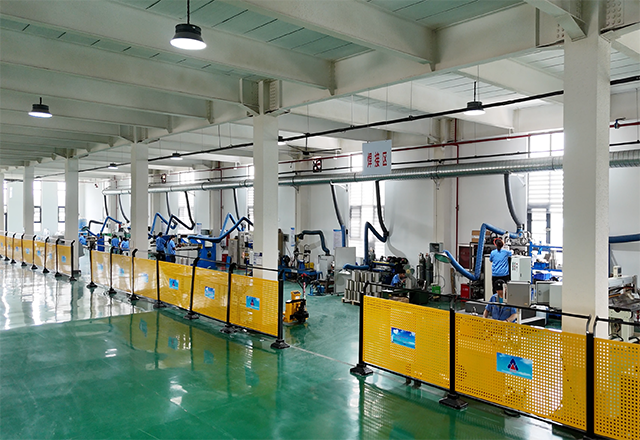
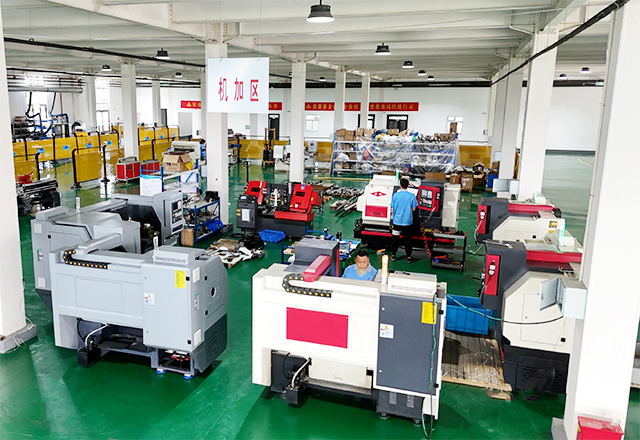
As a domestic manufacturer deeply rooted in the filtration industry and dedicated to the R&D and production of sintered filtration components, Huahang maintains full control over the entire process—from raw materials to finished products. We provide customized sintered mesh and filter element solutions for clients across various industries. If you have filtration requirements for specialized operating conditions, please contact the Huahang technical team at any time for one-on-one professional guidance on product selection.