Sintered Filter Element – Metal Core & Fine Filtration
In high-end gas filtration applications, sintered filter elements have long been an irreplaceable core filtration component due to their integrated metal structure and superior physicochemical properties. Based on different manufacturing processes, they are primarily categorized into two types: sintered mesh filter elements and powder-sintered filter elements. Huahang Filter, as a direct manufacturer from China, has over 20 years of experience in designing and producing sintered metal filter elements.
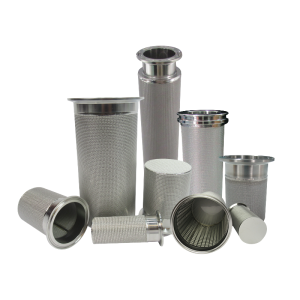
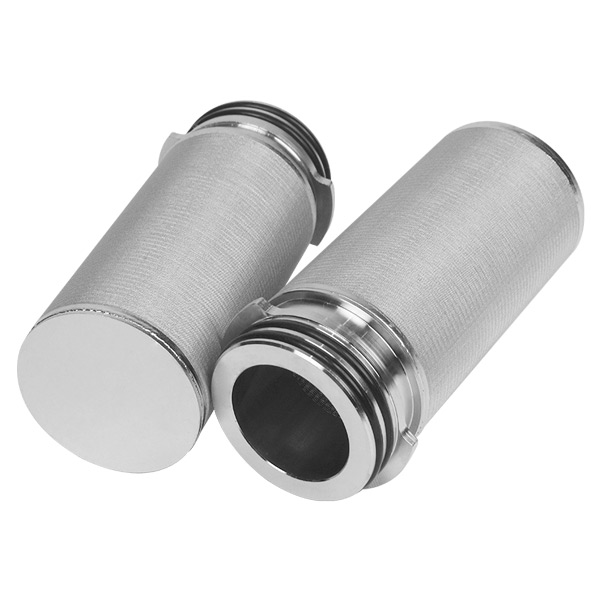
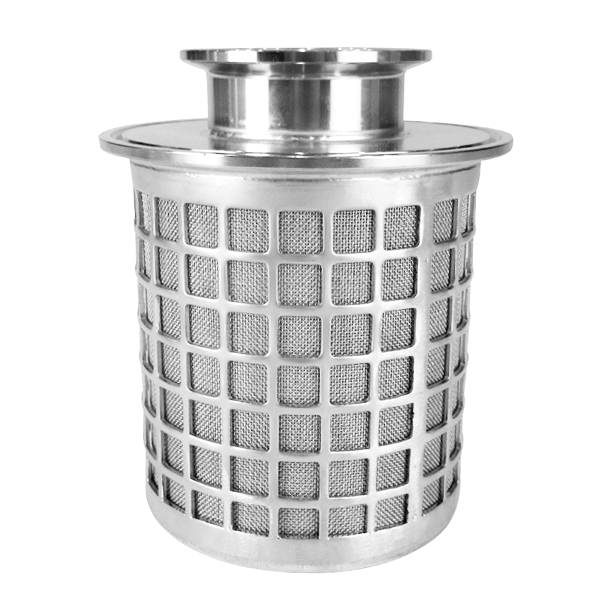
Sintered Metal Mesh Filter Cartridges
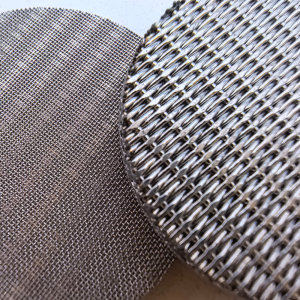
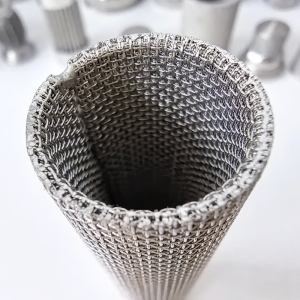
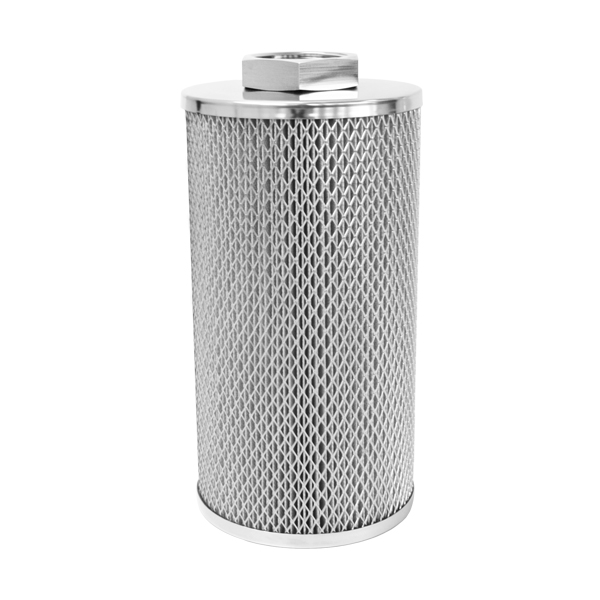
The sintered mesh filter element uses five-layer or multi-layer stainless steel wire mesh as the base material, which is laminated and pressed in the order of protective layer → filtration layer (micron rating control layer) → dispersion layer → support layer (multi-layer reinforcement layer), and then 1200℃ high temperature vacuum sintering to form an integrated metal skeleton. The core principle is that the mesh holes of each layer are staggered to form a uniform and ideal surface filtration structure.
- Raw Material: SUS316L stainless steel is the mainstream, and it also covers 304, 904L stainless steel, titanium alloy, nickel-based alloy (Hastelloy, Monel), and other high-performance materials.
- Filtration Rating: The named micron rating covering the range of 1–200μm, but the actual filter accuracy depends on the actual filter medium and working conditions. For example, the filter performance is different between filter gas and filter liquid based on the same micron rating.
- Temperature Resistance: -200℃ to 650℃, maintaining structural integrity under extreme temperature differences.
- Compressive strength: Up to 0.6MPa, 316L material can withstand nitric acid concentration up to 40% and sulfuric acid concentration up to 80%.
- Structural Characteristics: The multi-layer structure gives it extremely high mechanical strength and rigidity, and is easy to install. The pressure resistance can be improved by an additional support frame.
-1.jpg)
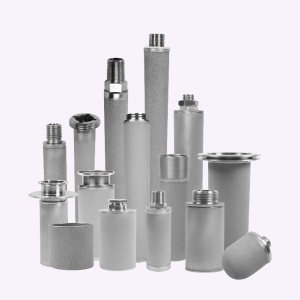
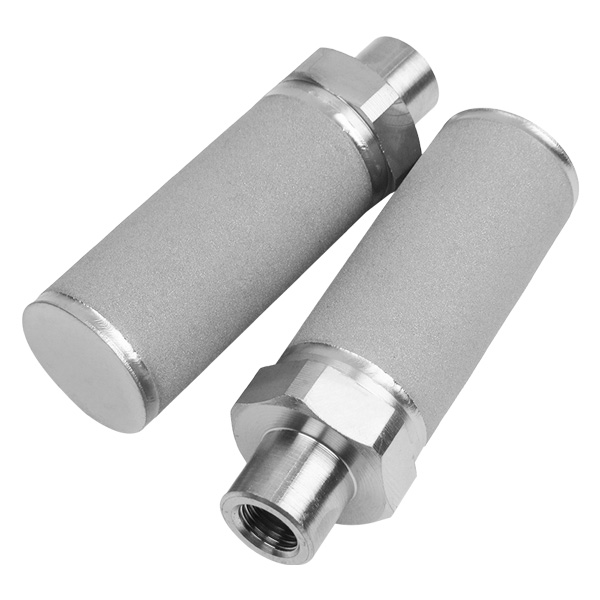
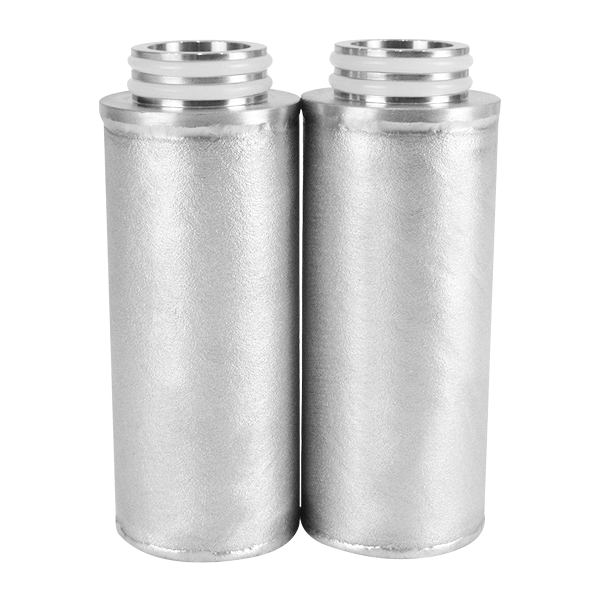
Porous Powder Sintered Filter Cartridges
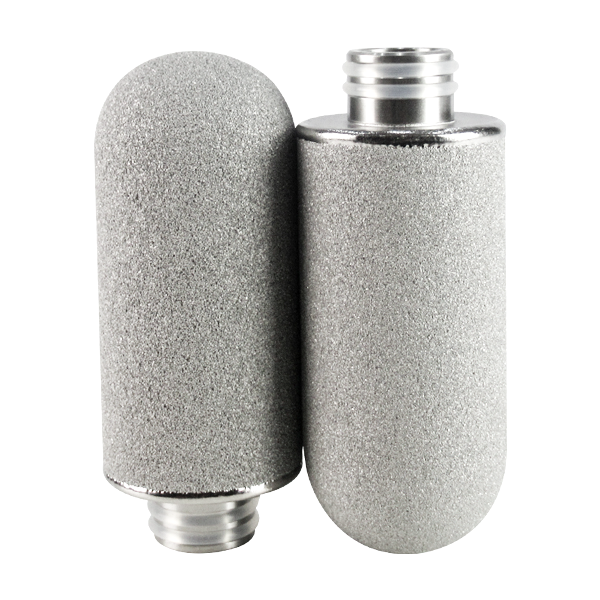
The metal powder sintered filter elements are made of metal powder (titanium powder, 316L stainless steel powder, copper/bronze powder, etc.) as raw materials through a three-step process of sieving→cold isostatic pressing/mold pressing→high temperature vacuum sintering.
- Raw Material: High-purity metal powder, such as 316L stainless steel powder, titanium powder, copper powder, Monel alloy powder, etc.
- Filtration Rating: At a range of 0.2–50μm. In high-end applications, gas filtration can reach the 0.01μm level (needs to cooperate with the metal film composite sintering process).
- Porosity: up to 35%–45%. High porosity means low flow resistance and large flux.
- Compressive strength: The internal pressure failure strength is up to 2MPa or more, and the maximum working pressure is ≤3MPa.
- Structural Characteristics: The internal pores are curved and criss-crossed, with uniform pore size distribution. It is a typical Depth Filtration mechanism. Impurities can be deposited inside the three-dimensional pores instead of just blocking the surface. The anti-clogging ability is significantly better than the surface filtration structure.
Main Difference
Sintered mesh filter elements have advanced advantages on mechanical strength, large area formed, and backwashed; Metal powder porous filter have advantages in terms of upper limit of micron rating, porosity control and morphological flexibility. The two complement each other, together covering the full spectrum of needs from coarse filtration to ultrafine filtration.
Ordinary Air Filter Cartridges – Fiber Media & Standard Filtration
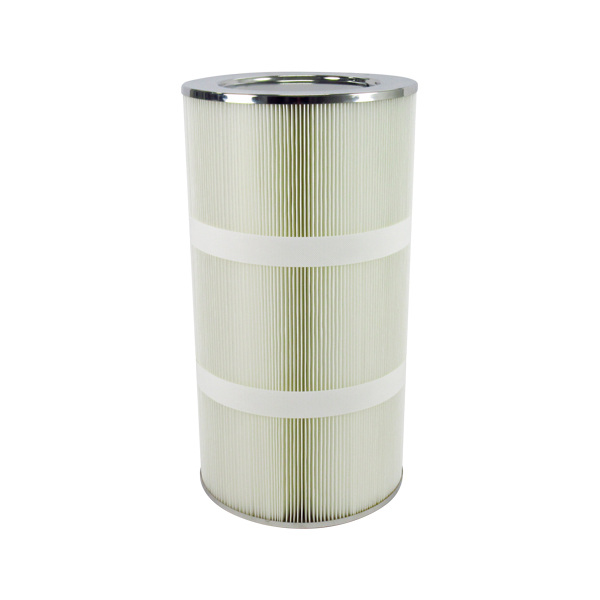
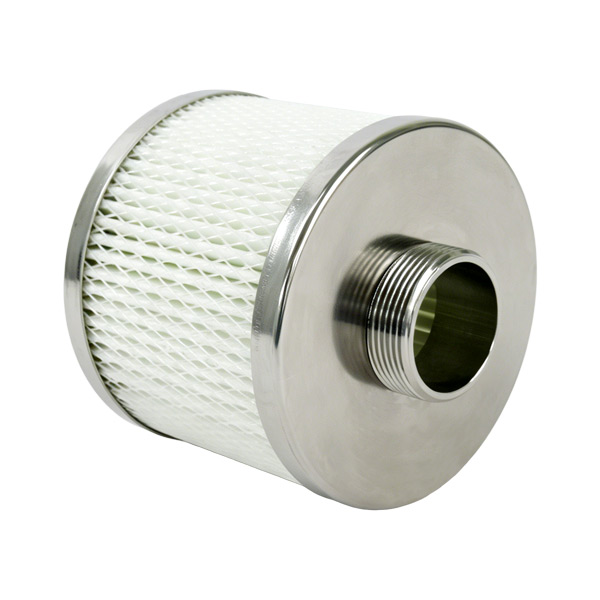
The ordinary air filter element (Air Dust Filter) is the most common filter element in engineering locomotives, automobile engines, laboratories, sterile operating rooms, and precision workshops. Its core function is to filter out dust, sand, microorganisms, and other suspended particles in the air to ensure the cleanliness of downstream equipment or the environment.
Mainstream Materials and Structures
| Material | Features | Applications |
| Polyester | Porous, loose, folded structure, with certain mechanical strength and water resistance | The most widely used material for dust collection at common temperatures |
| Fiberglass | High temperature resistance, high filtration efficiency, but relatively brittle | Air pre-filtration under high temperature conditions |
| PTFE Membrane | Hydrophobic and oleophobic, extremely chemically inert, uniform pore size | High-end HEPA/ULPA filter element, clean room filtration |
| PP | Wound with continuous long fibers, uniform structure, and large dirt-holding capacity | Coarse-effect pre-filtration, and front-end water purifier |
| Activated Carbon Composite Layer | adsorbs odors and volatile organic compounds (VOCs) | Air purifiers, gas masks |
Filtering Mechanisms and Limitations
Ordinary air filters mostly use a composite mechanism of “surface interception + deep interception”. The pleated structure of filter paper or fiber media increases the filtering area, but its essence is still a “disposable consumable”. The filter material will gradually become clogged during use, and the air intake resistance will continue to increase. Usually, the PP filter element needs to be replaced in about 3 months, the activated carbon filter element in about 6 months, and the fiber filter element is mostly used at the back end because it cannot be cleaned. In addition, once the paper filter element gets wet, the filtration efficiency will drop sharply, and it should not be in contact with oil and open flames.
Sintered Metal Filter vs Standard Air Filter
| Sintered Filter Elements | Air Filter Cartridges | |
| Filter Accuracy & Efficiency | The pore size distribution of the sintered filter element is concentrated, and the pores are uniform. The gas filtration accuracy can reach 0.3μm or even 0.01μm level (with metal film composite process), and the accuracy difference between batches is extremely small. | While ordinary air filters can achieve high single-pass filtration efficiency (such as the total filtration efficiency of cyclone paper filters of about 99.7%), their precision is difficult to quantify accurately, and their efficiency continues to decline over time. |
| High-Temperature Resistance | SS Sintered Mesh Filter -200℃~650℃ SS Powder Sintered Filter -200℃~800℃ | Paper filter elements are commonly resistant to temperatures between 80°C and 120°C, while PTFE membranes offer higher temperature resistance (approximately 260°C); their overall structural integrity drops sharply at high temperatures. |
| Corrosion Resistance & Chemical Stability | The sintered filter element is made of 316L, titanium alloy, Hastelloy, and other materials, which can resist strong corrosive media such as hydrochloric acid, sulfuric acid, hydroxide, aqua regia, and chloride solutions. | The fiber or paper materials of ordinary air filters have almost no resistance when faced with acid and alkali vapors and organic solvents. |
| Mechanical Strength | The sintered filter element is a metal-integrated sintered structure, with metal fusion sealing or welding end caps. The filter material and the frame are integrated into one body. There is no risk of particles falling off and no secondary pollution. | Ordinary air filters are mostly fixed with plastic end caps bonded or buckled. Under vibration and high-pressure differential conditions, there are hidden dangers of filter material falling off and sealing failure. |
| Pore Uniformity & Flux Stability | The 3D interconnected pore structure of sintered filter elements allows impurities to accumulate within the pores, resulting in a gradual rise in pressure drop and stable flow rates. | When the fibrous media in a regular air filter becomes clogged, the pressure drop increases sharply, and the throughput drops precipitously. |
| Washable & Lifespan | Sintered metal filter supports physical backflush (0.5MPa compressed air backflush can restore more than 90% of the flux), chemical cleaning (such as immersion in 5% nitric acid solution), ultrasonic cleaning, and CIP/SIP online cleaning. The filter element has a lifespan of up to 3-5 years. It needs to be replaced when the pressure difference exceeds 0.3MPa. | Cleaning methods are extremely limited (restricted to vibration, soft brushing, and compressed air back-blowing), and performance degrades irreversibly after each cleaning; essentially, it is a disposable consumable. |
| Long-term Stability | Even if the sintered filter element works under high temperature and high pressure, the pore size will not be deformed, and the filtration accuracy remains consistent. | The fiber media of ordinary air filters will undergo fiber migration and pore collapse after long-term use, and the filtration efficiency will continue to decrease. |
Working Condition Adaptation
Industrial Applications of Sintered Metal Filter Cartridges
| Industries | Applications | Recommend Materials | Recommend Accuracy |
| Petrochemical | High-temperature gas distribution for catalytic cracking, oil-gas separation, natural gas dehydration, and desulfurization | 316L / Hastelloy | 1–65 μm |
| Pharmaceutical | Precision filtration of fermentation broth, sterile filtration of pharmaceutical liquids (GMP compliant), high-temperature steam sterilization (121°C), CIP (Clean-in-Place) | 316L / Titanium alloy | 0.2–5 μm |
| New Energy | Impurity control in lithium battery electrolytes, fine filtration of hydrogen electrolysis fluids | 316L / Titanium alloy | 0.5–10 μm |
| Semiconductors & Electronics | High-purity gas purification, fine gas filtration for photolithography processes | Stainless steel or Titanium alloy + metal membrane | 0.1–0.3 μm |
| Food & Beverage | Fine filtration of vegetable oil (residue retention rate >99.8%), clarification of alcoholic beverages | 316L | 1–25 μm |
| Metallurgy & Building Materials | High-temperature flue gas pre-dedusting, metal powder recovery, and high-purity molten metal filtration | 316L / Nickel-based alloy | 50–120 μm |
| Water Treatment | RO (Reverse Osmosis) safety filtration, fine filtration of boiler feedwater | 316L / Titanium alloy | 1–50 μm |
| Automotive Industry | Sintered mesh filter elements for hydraulic oil, high-pressure cleaning vehicle filters, and in-vehicle aromatherapy filters | 316L | 10–50 μm |
Typical Applications of Standard Air Dust Filters
| Industries | Application Conditions | Filter Media Selection |
| Iron Steel & Metallurgy | last furnace blower intake pre-filtration; primary coarse filtration for converter dedusting systems; ventilation and dedusting in rolling workshops | G4-grade fiberglass coarse filter bags; F5–F7 grade polyester medium-efficiency filter cartridges; used to capture large iron particles and iron oxide scale dust, protecting downstream fine filtration equipment |
| Cement & Building Materials | Pre-filtration for rotary kiln tail-end dedusting; primary coarse filtration for vertical mill air intake; dust capture at concrete mixing plants | Polyester needle-felt filter bags (membrane-coated); PP melt-blown filter cartridges; alkali-resistant fibers withstand the highly alkaline environment of cement dust; coarse filtration stage handles the bulk of dust loading |
| Chemical & Petroleum Refining | Intake pre-filtration for catalytic cracking units; coarse filtration for sulfur recovery unit tail gas; ventilation and exhaust for chemical workshops | Fiberglass paper/polyester composite filter media; used to capture large suspended particles such as catalyst powder and sulfide granules; serves as a protective filter stage upstream of fine filtration |
| Power Generation (Coal/Gas-fired Plants) | Intake filtration for boiler induced-draft fans; primary dedusting stage for desulfurization and denitrification flue systems; ventilation and dedusting for coal handling systems | F7–F9 grade polyester medium-to-high efficiency filter bags; membrane-coated PTFE filter cartridges; temperature resistance of 120–150°C required; regular replacement needed to maintain induced-draft fan airflow |
Summary
Standard air filter elements are fundamentally defined by their role in “coarse/medium pre-filtration” and their nature as “disposable consumables.” In the aforementioned industrial contexts, they typically do not handle final, high-precision filtration; instead, they serve as a primary protective stage for advanced filtration equipment—such as sintered filters, HEPA/ULPA filters, or bag-type dust collectors. They offer a cost-effective means to capture large-particle contaminants, extend the service life of downstream high-precision filters, and reduce the overall operation and maintenance costs of the filtration system. Their operational scope is clearly defined: ambient temperatures (continuous operation at ≤150°C), atmospheric pressure, environments free from strong acid or alkali corrosion, requirements for medium-to-low filtration precision (≥1μm), and suitability for periodic replacement. Once operating conditions exceed these limits, sintered filter elements become the superior—or even the only—viable choice.