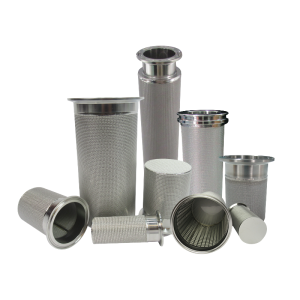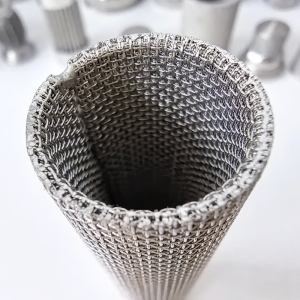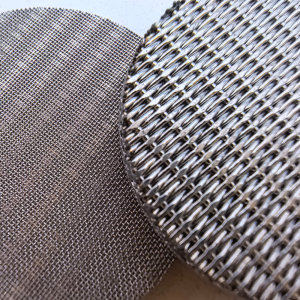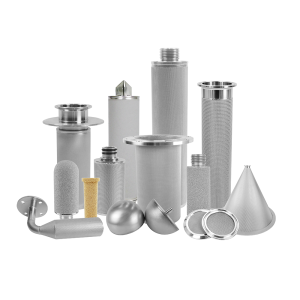
Throughout the lifecycle of sintered metal powder filter elements, “pore size” is a fundamental parameter determining filtration performance. When selecting products, many industrial clients focus solely on nominal filtration ratings while overlooking factors such as actual pore size distribution, control logic, and suitability for specific operating conditions; this often leads to issues like premature clogging and failure to meet capture efficiency standards. As a specialist manufacturer with deep experience in sintered metal filtration technology, Huahang offers extensive expertise in pore size selection and can effectively assist clients in choosing the optimal sintered powder filtration solution for their needs.
What Does Pore Size Mean for Powder Sintered Filter?
The pore size of the powder sintered filter element refers to the equivalent diameter of the three-dimensional connected micropores inside the filter element, which is completely different from the regular, straight, round holes of ordinary braided mesh – it is the equivalent size of the irregular pore channels naturally formed after the metal powder particles are sintered at high temperature and the particles are bonded to each other. Unlike ordinary sieves that simply “block anything larger than the mesh size”, powder sintered filter cartridges have a distribution system for their pore size: the “nominal pore size” we often talk about refers to the mainstream through-pore size that accounts for the largest proportion inside the filter cartridge. In addition, there are a small number of auxiliary pores that are either too large or too small. This distribution system directly determines the deep filtration capability of the filter cartridge and is the core foundation for powder-sintered filter cartridges to achieve submicron-level high-precision filtration. During the production process, Huahang will conduct dual testing by the bubbling method and mercury intrusion method to ensure that the actual pore size distribution deviation of each batch of filter elements is controlled within ±10%, which is much higher than the conventional industry standards.
How to Accurately Control the Pore Size at the Production End
Many customers are curious why the pore size stability of filter elements from different manufacturers differs greatly when the same metal powder is sintered. The core lies in the precise control of the entire production process:
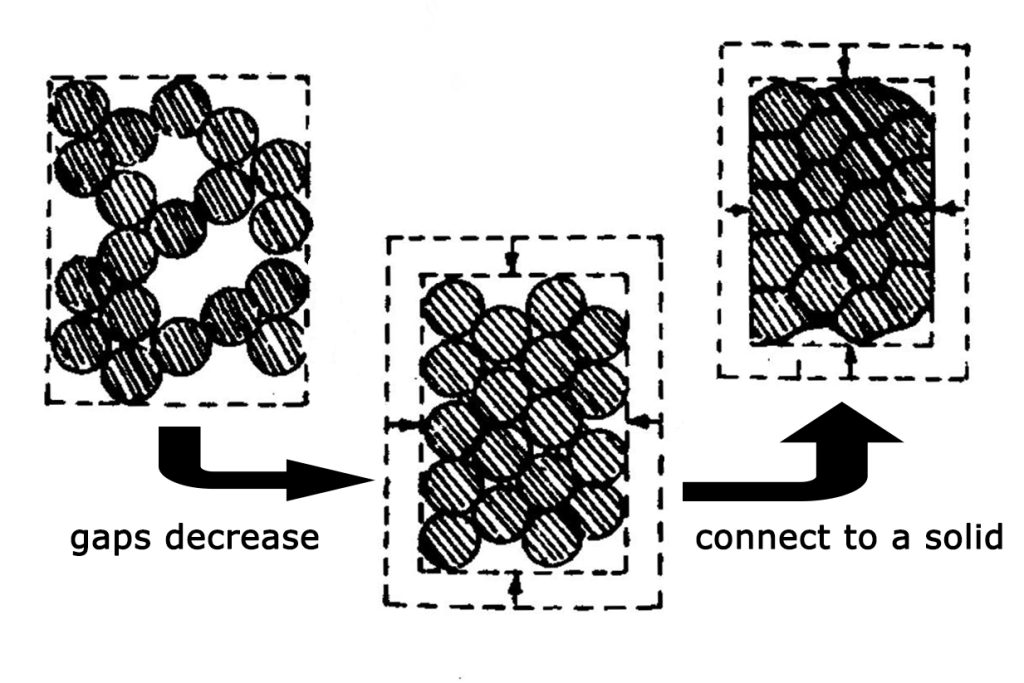
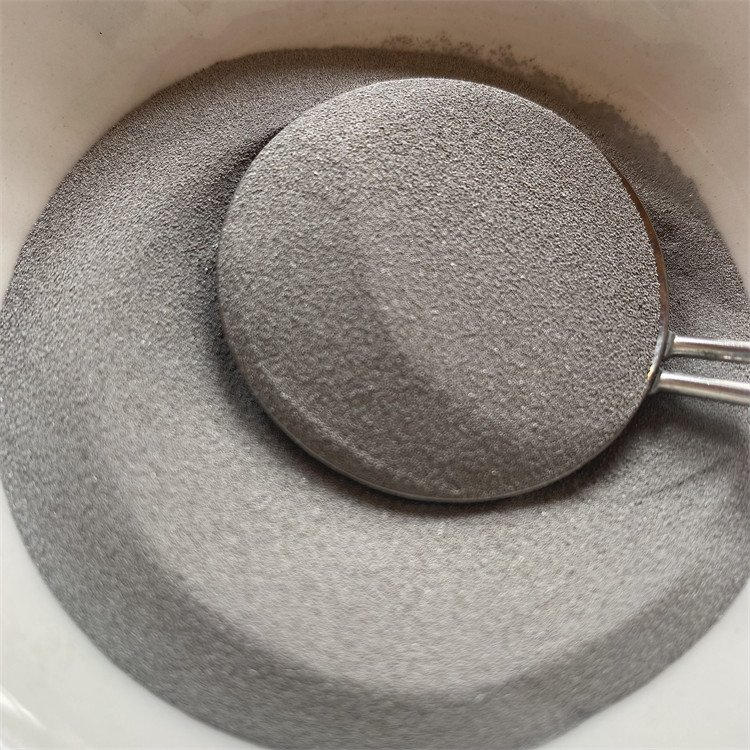
- Powder particle size classification is the first step to strictly classify metal powder according to particle size through air flow screening and air separation processes. Different mesh sizes of powders correspond to different basic pore size ranges. For example, if titanium powder with a particle size of 10 μm is selected, the basic pore size of the final sintered filter element can be stably controlled at the 0.1 μm level. If stainless steel powder with 200 μm is used, a large pore size filter element of 200 μm can finally be obtained. Huahang’s raw material library reserves more than 200 kinds of graded metal powders of different particle sizes, which can accurately match the full pore size customization needs from 0.1 μm to 200 μm.
- Molding pressure controls pore density In the cold isostatic pressing molding process, the compactness of the powder particles is controlled by adjusting the pressing pressure: the greater the pressure, the more closely the powder particles are arranged, and the smaller the pore size of the final sintered filter element; the smaller the pressure, the larger the gaps between the particles, and the larger the pore size of the final product.
- The sintering process accurately locks the final size by controlling the sintering temperature, holding time and sintering atmosphere to adjust the degree of bonding of the metal particles: the higher the temperature and the longer the holding time, the more complete the fusion and diffusion between the metal particles will be, and some micropores will be filled, and the pore size of the final product will be further reduced. Huahang adopts a self-developed multi-stage vacuum sintering curve, which can improve the pore size consistency of filter elements in the same batch by more than 30% and avoid the problem of uneven performance of products in the same batch.
How does Pore Size Affect the Performance of a Filter Cartridge?
The pore size is not an isolated number; it determines over 90% of the actual performance of a filter element.
- The maximum pore size of the directly locked filter element determines the smallest particle size that can be intercepted. The narrower the pore size distribution, the higher the interception efficiency of the filter element.
- Determine the fluid flux and operating energy consumption. Under the same filtration area, the larger the pore size, the lower the resistance to fluid passage, the smaller the operating load of the pump unit, and the lower the long-term energy consumption cost. Many customers have reported that the pressure differential rises rapidly when using the filter cartridges, which is essentially because they have chosen the wrong pore size.
- The reasonable pore size gradient distribution that affects the dirt-holding capacity and service life can gradually intercept impurities from the surface of the filter element to the deep layers, greatly increasing the overall dirt-holding capacity and extending the clogging cycle of the filter element. The gradient pore size filter element customized by Huahang for a new energy customer has a dirt-holding capacity that is 70% higher than that of a uniform pore size filter element of the same specification. The customer’s filter element replacement cycle is directly extended from 2 months to 6 months.
- The filter element with uniform pore size distribution and good penetration determines the cleaning and regeneration efficiency. Impurities will not be stuck in the blind holes and are easier to be completely taken out during backwashing. The flux recovery rate after cleaning can reach more than 90%, which greatly increases the number of reuses of the filter element and reduces long-term consumable costs.
How to Select the Right Pore Size for Industrial Applications
Selecting the correct pore size is not as simple as assuming “smaller is better.” You must make a comprehensive assessment based on actual operating conditions:
For high-flow applications —- Such as liquid pre-treatment or coarse dust removal from high-temperature flue gas, prioritize a pore size 20%–30% larger than the target particle size. This maximizes flow while maintaining filtration efficiency and prevents rapid filter element clogging.
For high-precision applications —- Such as pharmaceutical sterilization, catalyst recovery, or ultrapure water purification for electronics—you must select a pore size at least 30% smaller than the target particle size. Additionally, a narrow pore size distribution is essential to ensure a sub-micron impurity retention efficiency of over 99.9%.
For handling viscous fluids or high impurity loads —- If you are working with viscous fluids and high impurity content, prioritize filter cartridges with a gradient pore size structure. This will significantly improve dirt-holding capacity while ensuring accuracy and reducing downtime for maintenance.
If you are currently struggling with issues such as mismatched pore sizes, rapid clogging, or insufficient retention efficiency, contact the Huahang technical team today. We offer free pore size testing and application suitability assessments to help you select the optimal pore size solution—balancing filtration efficiency, flow rate, and service life.