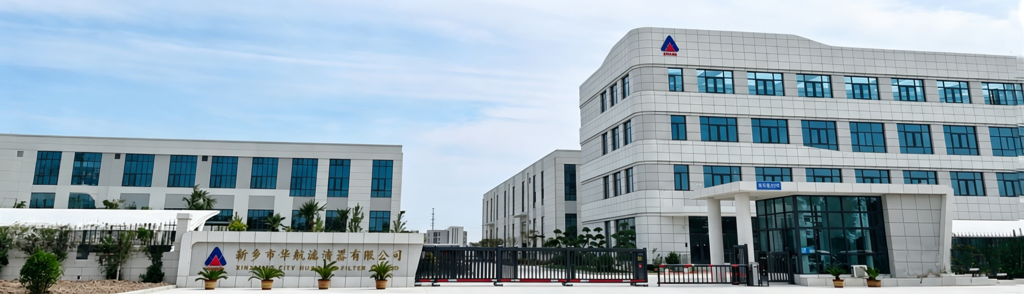
In high-end industrial fields such as petrochemicals, new energy, water treatment, and precision hydraulics, the stability of fluid purification directly determines the product yield and operational safety of the entire production line. As the core component of the high-precision filtration track, the sintered mesh filter element has become the first choice for many demanding working conditions due to its strength, uniform pore distribution, and stable filtration accuracy that far exceeds that of ordinary woven mesh. Huahang has been deeply involved in metal sintered filtration technology for many years and has provided customized sintered mesh filter element solutions to more than 500 industrial customers. Today, we will completely dismantle the technical logic of sintered mesh filter elements for you, from material structure, filtration mechanism, performance advantages, to actual implementation scenarios.
Core Materials and Forming Processes of Sintered Mesh Filter Elements
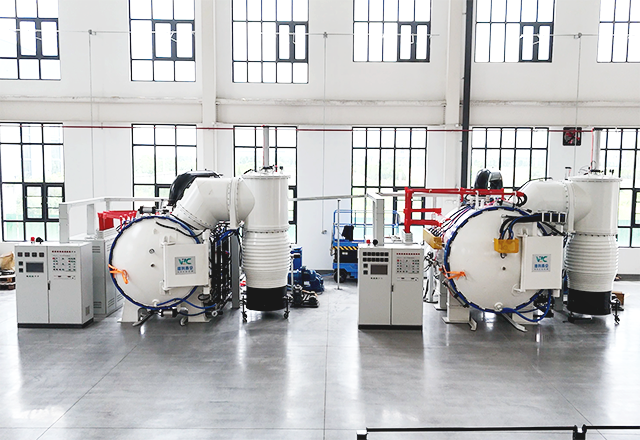
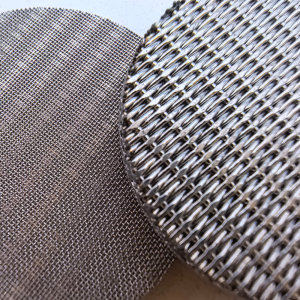
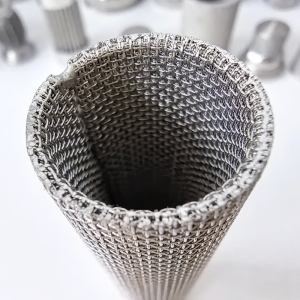
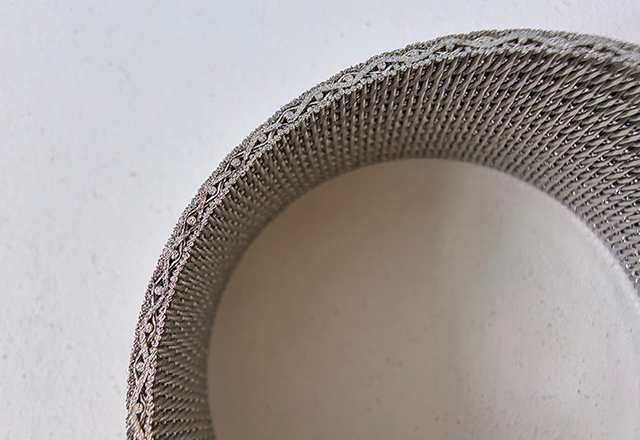
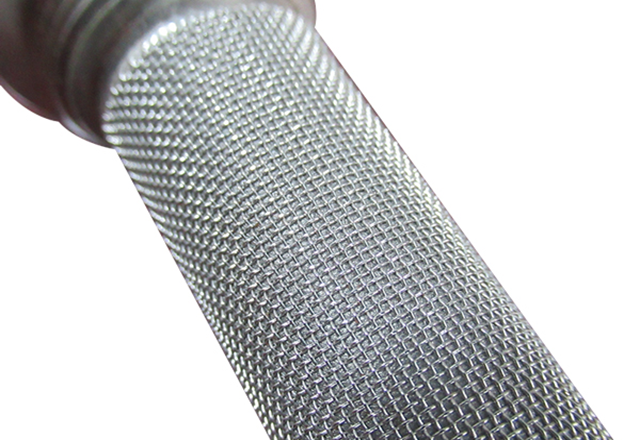
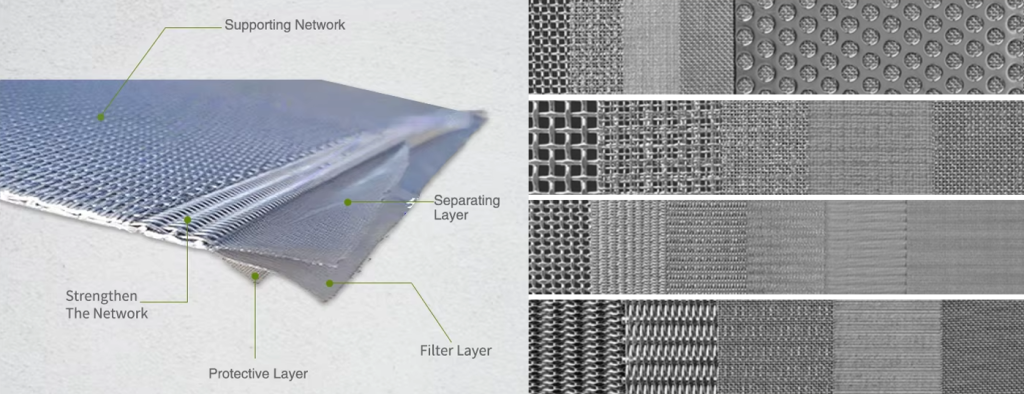
Unlike simple filter elements made by merely rolling and welding standard wire mesh, the core filtration layer of a sintered mesh filter element consists of multiple layers of 304/316L stainless steel wire mesh arranged in a specific stack configuration and fused into a single unit via a high-temperature vacuum sintering process. Huahang’s standard five-layer sintered mesh structure comprises—from outside to inside—a protective layer, a dispersion layer, a fine filtration layer, a support layer, and a skeleton layer. The mesh count and wire diameter of each layer are precisely matched; during sintering, the contact points of the metal wires form metallurgical bonds, completely eliminating issues such as mesh displacement and pore deformation often caused by prolonged fluid impact in conventional filters.
A direct advantage of this process is that the overall porosity of the filter element remains stable within the 35%–50% range—significantly higher than the 20%–30% range found in sintered powder filter elements. While maintaining equivalent filtration precision, this design reduces fluid flow resistance by over 40%, substantially lowering the energy consumption of pump systems. For specialized operating conditions—such as those involving anode materials for new energy applications or highly acidic/alkaline chemical fluids—Huahang offers customized sintered mesh filter elements made from special materials like titanium alloys and Hastelloy. These are designed to withstand extreme temperatures ranging from -200°C to 600°C and maintain long-term structural stability even when exposed to highly corrosive fluids.
Detailed Explanation of the Layered Filtration Mechanism of Sintered Mesh Filter Elements
Many people mistakenly think that the sintered mesh filter element is just a “denser metal sieve”. In fact, its filtration process is a layered and progressive composite interception system. Each layer of the structure is responsible for its own filtration function:
Surface coarse interception: The outermost layer of high-mesh protection wire mesh first blocks the largest particles in the fluid on the surface of the filter element, preventing large particles from directly rushing into the internal fine layer and causing local blockage. It also makes the surface filter cake easier to peel off during backwashing.
Dispersion layer rectification: After the fluid intercepted by the first layer enters the dispersion layer, the originally concentrated fluid stream is evenly dispersed, changing from local high-speed flow to uniform penetration along the circumferential surface of the filter element, preventing excessive local flow rates from penetrating the fine filter layer, and allowing 100% utilization of the entire filter area of the filter element.
Core layer depth capture: The high-precision sintered layer in the middle is the “heart” of the entire filter element. The three-dimensional staggered pores here are not straight round holes, but form a large number of tortuous fluid channels. Sub-micron particles with a particle size smaller than the nominal precision will be firmly captured under the triple action of inertial collision, Brownian diffusion and surface adsorption. This is the core reason why the sintered mesh filter element can achieve “surface + deep” composite filtration.
Support layer diversion: The finely filtered fluid enters the support layer. The large-aperture support wire mesh provides a smooth diversion channel for the fluid, which quickly collects into the filter element and flows out, preventing the fluid from forming local turbulence behind the filter layer and reducing the overall pressure rise rate. When Huahang customized filter elements for a large hydraulic equipment factory, it was through optimizing the stacked arrangement structure that the filter element’s dirt-holding capacity was increased by 60%. The customer’s filter element replacement cycle was extended from 3 months to 8 months, significantly reducing operation and maintenance costs.
Performance Advantages and Working Condition Adaptation Logic
Compared to traditional filtration elements—such as PP melt-blown, wound, or standard woven mesh filters—sintered mesh filter cartridges offer performance advantages that directly address the core challenges of high-end industrial applications:
High strength and impact resistance: The integral metallurgical structure allows the filter element to withstand positive and negative pressure differential impacts of up to 2.0MPa. It will not deform or crack under high-pressure pulse conditions, making it fully compatible with drilling rig hydraulic systems, high-pressure pipeline filtration, and other scenarios.
Long-term Filtration Stability: Unlike standard woven mesh, which can suffer from mesh shifting or enlarged pores due to prolonged fluid erosion, Huahang’s sintered mesh cartridges maintain a filtration precision deviation of within ±5% even after 1,000 backwashing cycles.
Easy to Clean and Reusable: Featuring a uniform, straight-through pore structure, clogged cartridges can fully restore their performance through methods such as high-pressure reverse water flushing, ultrasonic cleaning, or high-temperature baking. They can be reused 3–5 times in certain applications, resulting in a total cost of ownership far lower than that of disposable filtration elements.
Resilience in Extreme Environments: Constructed entirely from stainless steel, these cartridges operate reliably over the long term in high-temperature steam, strongly acidic or alkaline fluids, and organic solvents. They fully meet specialized requirements such as high-temperature in-situ sterilization in the food and beverage industry and the filtration of corrosive fluids in chemical processing.
In a filtration project for new energy cathode material slurry, Huahang’s custom sintered mesh cartridges enabled the client to achieve zero metal particle shedding and a 2.3% increase in product yield, effectively resolving a long-standing issue with excessive impurities.
Customization Capabilities & Services of Huahang Sintered Mesh Filter Element
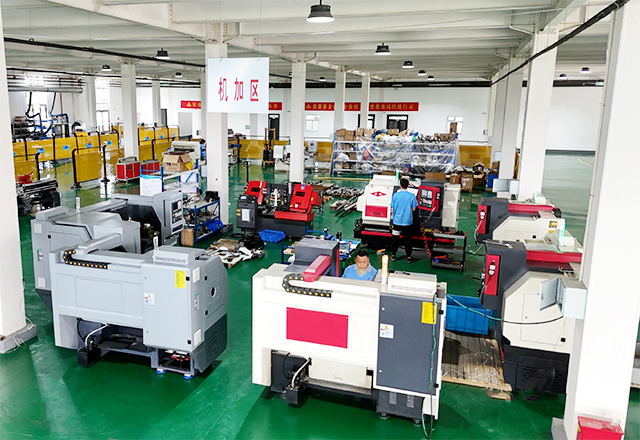
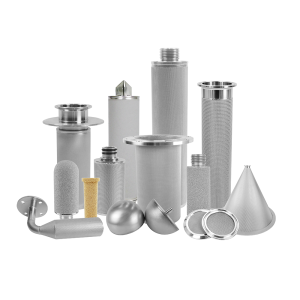
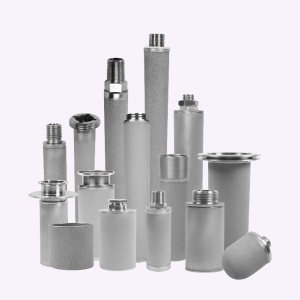
Standard sintered mesh filter elements often fail to meet the specific requirements of every industrial application. Leveraging its in-house mold workshop and sintering production lines, Huahang offers comprehensive customization capabilities. We can manufacture filters to exact specifications based on client drawings—accommodating filtration ratings from 1μm to 200μm; shapes ranging from cylindrical and pleated to conical or custom geometries; and connection types such as 222, 226, flange, or threaded fittings. We also provide a preliminary application assessment for all clients: our technical team analyzes parameters—such as fluid composition, operating temperature, pressure range, and target impurity levels—to recommend the optimal layered structure and material composition, thereby preventing issues like premature clogging or substandard filtration performance caused by improper selection. Huahang’s sintered mesh filter elements are currently utilized across dozens of industries, including petroleum sand control, water treatment, dust recovery in vacuum feeding systems, and precision hydraulic oil filtration, helping clients reduce filtration-related downtime by over 30%.
If you are struggling with issues such as short filter lifespan, inconsistent filtration precision, or inadequate corrosion resistance in your current system, contact Huahang’s technical team today for a free, customized filtration solution assessment—and resolve your core fluid filtration challenges once and for all.